
Paper Sizes
Paper sizes work on a reverse scale. This means that the larger the number, the smaller the size. While paper sizes in the A-Series can go up to A10, the most commonly used sizes are:

Is A4 bigger than A3? And where does A2 fit into the mix?
At first glance, paper sizes may seem a random combination of letters and numbers. But there’s an exact science behind each paper size that determines its dimensions and standard uses.
Here’s how a single digit can change the dimensions of a piece of paper.
Paper doesn’t just come in different sizes - it also comes in different series. A-class paper is the most common series that we use for our day-to-day printing needs. A-class paper sizes are determined by their ratios. If you fold an A-class paper in half, it will create the next smallest size.
Paper sizes work on a reverse scale. This means that the larger the number, the smaller the size. While paper sizes in the A-Series can go up to A10, the most commonly used sizes are:
841 x 1189mm
The A0 size is comparable to a table top.
Main uses of A0 paper:
technical drawing, posters.
594 x 841mm
The A1 size is comparable to a small, freestanding desk top.
Main uses of A1 paper:
technical drawing, maps, large-format advertising materials, posters.
420 x 594 mm
The A2 size is comparable to a large monitor.
Main uses of A2 paper:
technical drawings, diagrams, calendars, medium-sized posters, artwork.
297 x 420 mm
The A3 size is comparable to an average desktop monitor.
Main uses of A3 paper:
Diagrams, drawings, charts, graphs, large brochures, small posters, advertisements.
210 x 297 mm
The A4 size is comparable to a laptop screen.
Main uses of A4 paper:
documents, notebooks, magazines, leaflets, flyers, children’s books, encyclopaedias, official reports, letters, menus.
148 x 210 mm
The A5 size is comparable to a notebook or journal.
Main uses of A5 paper:
greeting cards, flyers, commercial and promotional booklets, leaflets, flyers, notepads, pocket books.
105 x 148 mm
The A6 size is comparable to a rectangular postcard.
Main uses of A6 paper:
postcards, invitations, small leaflets, flyers, small pocketbooks.
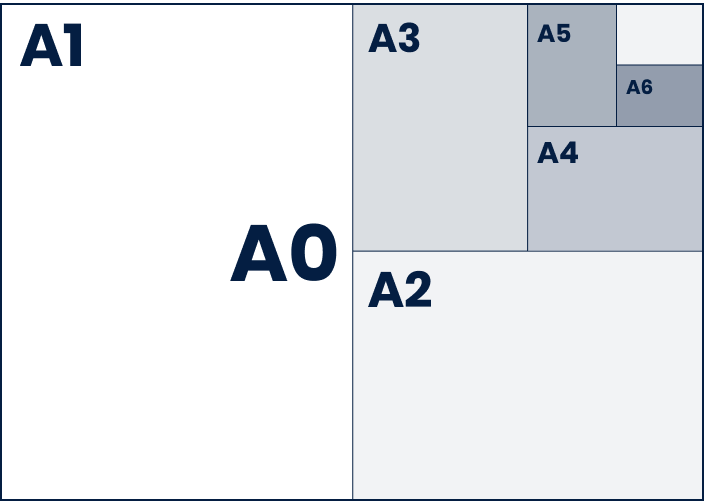
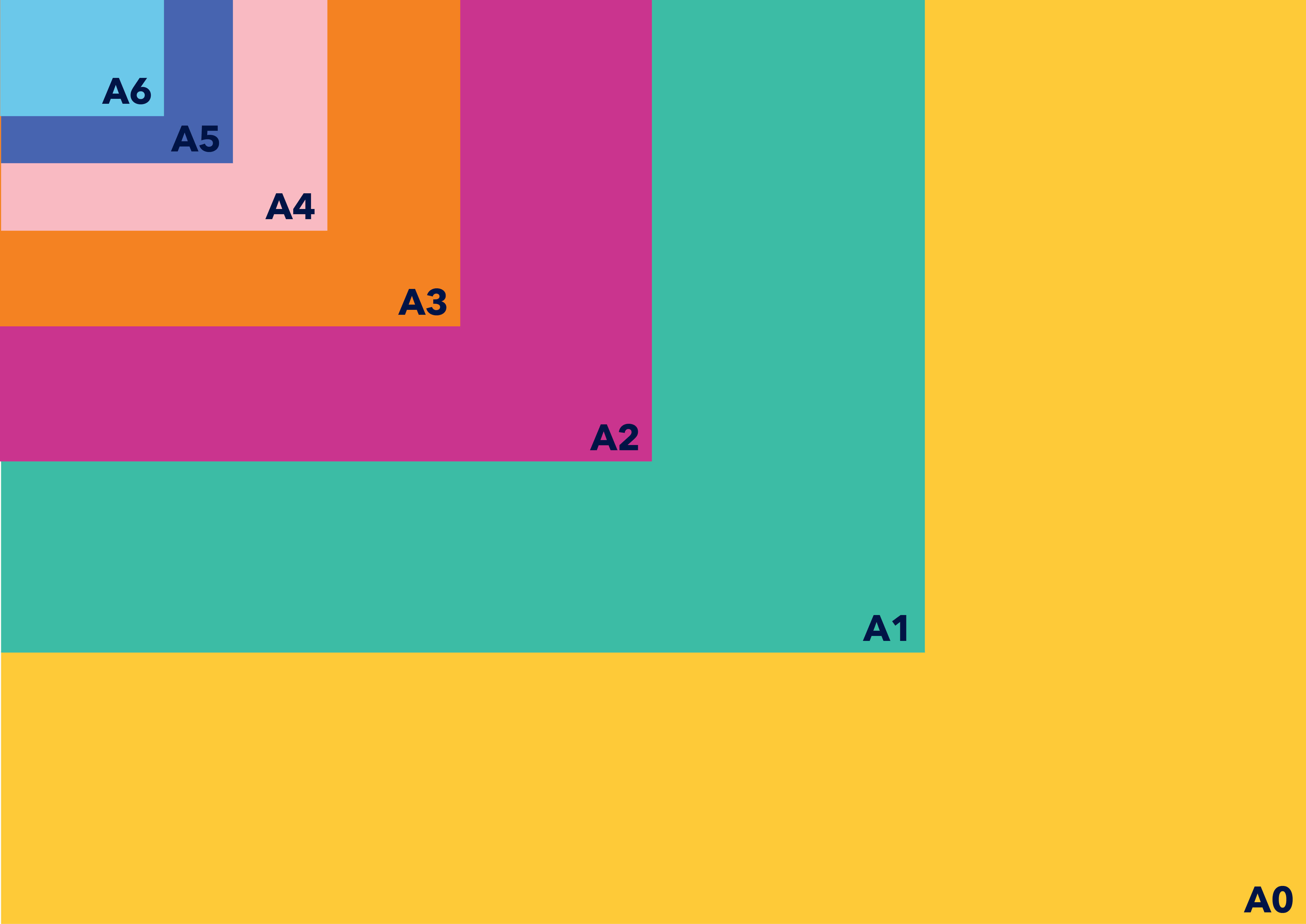
In order to visualise the different A-Series paper sizes, try to compare each one in relation to the paper size that is one grade larger.
Each paper size is a perfect half of the larger size. Folding an A0 size creates an A1 size, folding an A1 size creates an A2 size, and so on. If you’re struggling to imagine just how big an A3 size is, just picture two A4 size papers sitting next to each other.

The dimensions of paper sizes aren’t random. Each size is based on the square root of two. This is why two pieces of paper with the same proportions can fit perfectly together when placed alongside one another.
Need A3 sizes but have a tall stack of A4 sizes in your stationery drawer? Simply place two A4 sizes next to each other and you’ll have an A3 size piece of paper.
But this maths fact is more than just a handy tip for resourceful people looking to make the most out of their current paper collection. Because A-series paper sizes have the same proportions, documents or artworks can easily be resized to fit onto any paper size without distortion.
There are 11 paper sizes in the A-series. However, you typically won’t see paper sizes smaller than an A6 size. A7 - A10 paper sizes are reserved for more niche uses such as tickets, coupons, drivers licences and stamps.
Outside of the A-series, there are two other series that can be used for instances where the A-series is not suitable: B-series and C-series. B-series is mostly used by the printing industry, while C-series is generally used for envelopes.
While the paper sizes within the A-Series are extremely popular, that’s not to say that they are your only option for printing.
At Snap Print Solutions, we understand that not all projects can be condensed into a restricted size, such as large format digital printing. If you require a unique paper size for your printing project, get in touch with your local Snap Centre to find out how we can bring your vision to paper - standard or otherwise.




Earn 1 Qantas Point for every $1 spend at your local Snap Centre. Find out more