
Know Your GSM Paper Stock
)
The paper you choose for your prints is more important than you might think. It shapes both the look and feel of your final product from the start, which is also why choosing the right paper gsm matters.
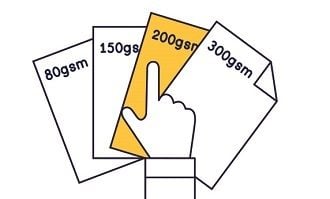
When choosing the right material for printing, it's essential to understand the gsm in paper meaning. It's a standard way to measure paper thickness in gsm, indicating the weight and thickness of the paper, which also affects its quality and feel. This value also significantly affects durability, how colour appears on the page and even how professional the printout looks.
If you're unsure where to start, this paper gsm guide will help you choose the right paper for your project more confidently.
Paper GSM Guide - How to Choose the Right Paper
There are hundreds of different paper combinations to choose from, and if you’re not familiar with paper types, you’re not alone. People often get confused when it comes to differentiating between paper stocks.
Let's break it down. First, choose your paper sizes and weight. What are you printing? Is it a report? A brochure? Perhaps a business card? Here's a brief guide based on paper thickness in gsm:
80 - 110 GSM
This is the most common weight range used for all general office printing, including 100 gsm paper. It’s ideal for high-volume jobs like letters, invoices, forms and internal documents.
Too thin for rich colour printing or heavy double-sided work, 80 gsm paper is usually seen as a functional choice rather than a creative one. You’re not bound to impress anyone with it, but it’s the most cost-effective paper for basic documents and longer print runs.
120 - 210 GSM
This range is ideal for marketing collateral that requires a balance between quality and affordability. Paper between 120 and 210 gsm works for brochures, letterhead, presentations and product information sheets.
200 gsm paper, in particular, is thick enough to feel substantial but still flexible enough to fold. It's also excellent for double-sided printing, with minimal show-through.
If you need a high-quality finish without the firmness of card stock, this range of paper gsm gives you the best of both worlds.
250 - 300 GSM
At this weight, you’re working with a sturdier, card-like firmness. Paper at 250 to 300 gsm feels firm, durable and professional. It’s often used for premium marketing pieces, postcards, covers and invitations.
300 gsm paper has a strong and heavy finish that resists bending or tearing - the right fit for premium applications that need to stay crisp and intact, such as high-end brochures, reports or custom presentation folders.
To improve your document's structure and appearance, combine heavy covers with lighter inner pages to give your document more structure and polish.
Coated or Uncoated: Which Paper Type is Better
Once you’ve picked your paper weight, it’s time to choose the finish of your paper. While there are plenty of options available, they generally fall into two main categories: coated and uncoated. Each has its pros and cons. Let’s explore them.
Coated Paper
Coated paper is finished with a smooth layer — often glossy or matte — which improves print sharpness and makes colours pop. It’s commonly used in promotional materials like posters, flyers, catalogues and high-end brochures.
Coated Paper Pros
- Glossy or matte finishes enhance image sharpness
- Ideal for photos and vibrant graphics
- Resists moisture and smudging
- Great for designs where ink clarity is key
Coated Paper Cons
- More difficult to write on
- May appear overly shiny for text-heavy documents
- Not suitable for eco-conscious brands if using standard coating
- More expensive than uncoated alternatives
Uncoated Paper
Uncoated paper has a more natural, textured surface. It absorbs ink slightly more than coated stock, giving it a softer, muted appearance. This finish is often chosen for letterheads, business stationery, forms and publications that suit a classic or tactile feel.
Uncoated Paper Pros
- Easy to write or print on
- More natural and tactile finish
- Often recyclable and sustainable
- Gives a professional, understated look
Uncoated Paper Cons
- Colours appear softer or less vibrant
- More absorbent, can lead to ink spread
- Not ideal for high-resolution images or detailed graphics
Find the Right Printing Materials With Snap Print Solutions
The difference between 100 gsm paper and 300 gsm paper might not seem significant, but it pays to keep gsm in mind and take your time when choosing your paper stock. The wrong type of paper could lead to poor results. Not only could it look terrible, but you may also need to spend more money on reprinting, which could also set your project back. That's why it's always a good idea to get professional advice before printing.
Snap Print Solutions offers a range of online printing services, graphic design services and commercial printing services to support your business at every stage of the process.
Need help deciding? Give your project the finish it deserves and reach out to your local Snap Print Solutions Centre or explore our marketing print solutions for expert advice and tailored recommendations.
)
)
)