What You Need to Know When Printing for Events

Once the event date is locked in, other deadlines are planned around it. Signs, brochures, banners and name badges all need to be ready at the same time, which leaves little room for delays. Most scheduling problems occur well before production begins, usually because artwork or delivery arrangements aren't finalised.
This guide covers everything you need to know about event signage: what to order, how to choose the right material, how large your signage needs to be, what makes artwork print-ready and how to schedule production against a fixed event date. If you're planning a larger display, our event marketing collateral includes a range of printed items that support a successful event.
Key Takeaways
Decide the right material for the location and signage size for the viewing distance.
Choose event marketing materials that suit the environment. Pull-up banners belong in covered spaces, while corflute is a better fit for exposed outdoor locations.
Size every sign based on where people will read it, not how much information you want to include.
Artwork delays are far more common than printing delays, so check files well before production begins.
Event Signage and Event Marketing Materials: What to Order
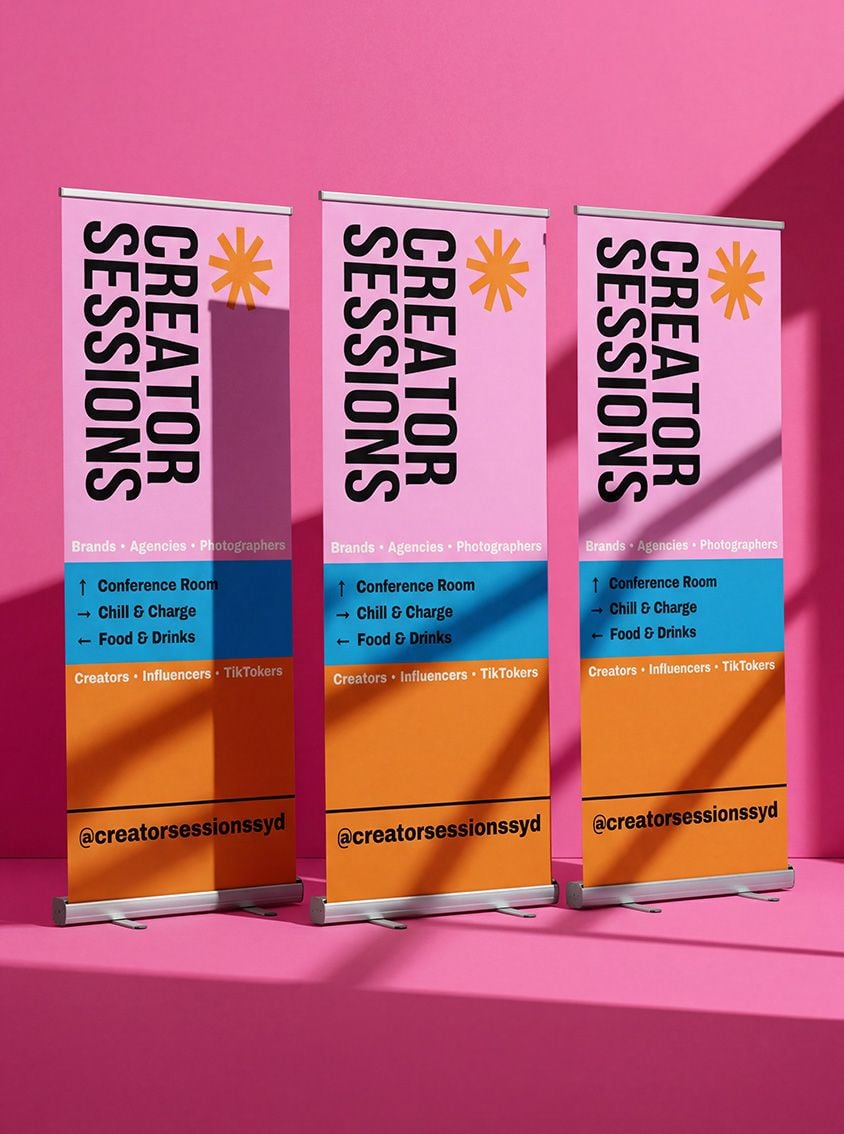
Every printed item serves a specific purpose within the overall event display. Some items attract attention from across the venue. Pull-up banners, media walls and larger signs help visitors find your stand much more easily.
Others define the space itself. Posters, corflute signs and A-frame signs reinforce your branding while reminding visitors where they are.
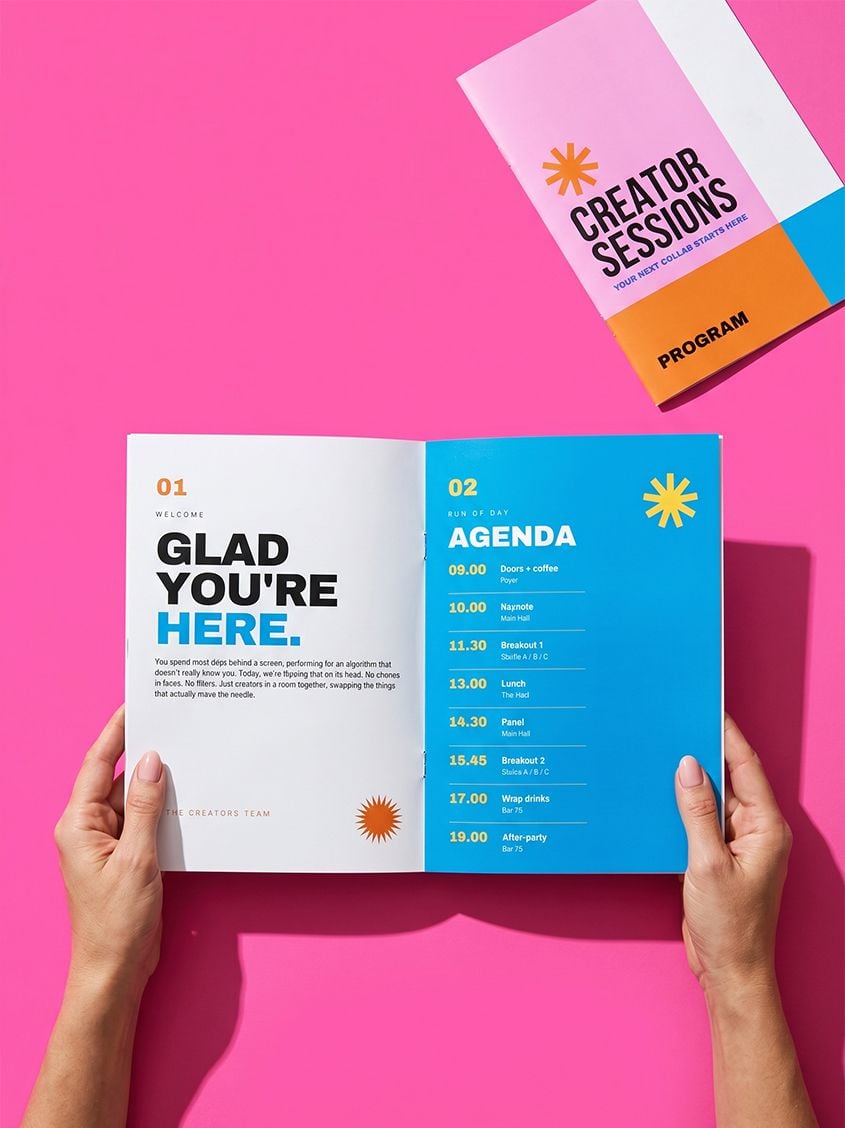
Printed handouts such as brochures and flyers give people something to take away after the conversation ends. Name badges and lanyards make it easier for attendees to identify your team throughout the event.
Planning this mix of materials is essential because business events remain a key part of Australia's economy. Business event visitors spent $17.2 billion during their trips in the year to December 2025. This spending reflects the importance of making a strong impression when people are ready to meet suppliers face-to-face.
Choosing Materials for Event Signage Printing
Choosing the right material starts with how the product will be used. Start by thinking about where it will be displayed. Then consider how long it will stay there and decide whether you'll use it again for another event. Those answers can narrow the options fast.
Where it is going | Typical items | Material to consider | What to watch |
|---|---|---|---|
Where it is going | Pull-up banners, media wall, standees | Fabric, foam board | Transport and storage between events |
Indoor wayfinding | Directional signs, room and lectern signage | Foam board, acrylic | Venue fixing rules |
Covered outdoor area | Pull-up banners, posters, A-frames | Fabric, corflute | Wind entering from open sides |
Fully exposed outdoor | A-frames, corflute signs, flags | Corflute | Wind, weather and secure fixing |
Reused across several events | Banners, media walls, standees | Fabric, corflute | Undated artwork and repeated transport |
A rigid sign works well in some locations. In others, fabric is the better choice because it moves with the conditions instead of resisting them.
If you're comparing different display options, take a look at our range of custom signage to decide which format is right for your event.
How Big Should Your Signage Be?
Many people choose a sign first and think about the viewing distance later. It's usually easier to reverse that process.
Picture where people will first notice your display. Will they be standing in front of it, walking past it or approaching from the other side of an exhibition hall?
A standard Snap pull-up banner measures 850 x 2000mm and is designed to be read from roughly 3.3 to 4.3 metres away. That viewing distance guides how much text the sign should carry. A sign seen from several metres away needs a business name and one clear message. Anything more is unlikely to be read before people move on.
The positioning is crucial too. Even the best-designed sign won't work if it's hidden behind furniture, other exhibitors or a crowd gathered around your stand.
Getting Artwork Print-Ready
Event signage printing can only begin once artwork is ready for production, and the files usually require a few adjustments even before then. Taking care of those beforehand helps avoid delays once printing is scheduled.
Logos work best as vector artwork because they scale cleanly to different sizes. Photos and graphics need enough detail for the finished print size rather than the screen version.
If your design runs to the edge, allow for bleed and keep important text well inside the trim area. Pull-up banners also have a section that disappears into the base, so important information shouldn't be placed there.
Fonts should be supplied or converted to outlines before production. It's also worth remembering that colours viewed on a screen won't always match the finished printed result exactly.
If your artwork isn't ready, that's not a reason to delay getting started. Snap's in-house graphic design specialists can prepare new artwork or update existing files before they go to print.
When to Order Your Event Printing
Plan backwards from the moment your stand needs to be ready, not the day the event opens. From there, work backwards through delivery, production and artwork approval. Allow time for any information that's still outstanding, such as speaker names, sponsor logos, event schedules or final event details.
Build in a little extra time for any last-minute corrections or unexpected changes. That buffer helps keep the event on track if something unexpected happens.
Ordering related items together also keeps branding consistent and simplifies production. Your local Snap Centre can recommend the right lead time once the scope of your event is confirmed.
Delivery to the Venue and Setup on the Day
Think carefully about where your event print should be delivered. If it's going directly to the venue, assign someone who'll be on site during bump-in and label every item clearly with the stand or room details. Before production begins, check the venue's requirements for stand sizes and signage installation, as well as how the finished print will need to be packed for safe storage and transport.
FAQs
What is the best material for outdoor event signage?
Corflute is a common choice for rigid outdoor event signage, while fabric can work well where wind is a greater factor because it moves more freely. Teardrop banners are another practical option for outdoor events, particularly when you need freestanding signage that can be positioned around entrances, pathways or event areas. Pull-up banners are generally better suited to covered spaces than fully exposed outdoor locations.
Can event signage be reused at another event?
Yes, provided it's designed with reuse in mind. Omitting dates, venue names, campaign-specific messaging and other specific details makes signage useful across multiple events. If sustainability is part of your purchasing requirements, ask your print supplier about Sustainable Green Print. This is an environmental certification run by the Visual Media Association for the print, packaging and signage sectors.
How far in advance should event print be ordered?
Work backwards from the day your materials need to be on site rather than the event itself. Allow time for artwork approval and any corrections, then speak with your local Snap Centre about the lead time for your specific project.
Related Blogs